

Corpus
Concordance search across the eight text corpora. Results are shown in keyword-in-context form; the legacy site searched each corpus separately.
- 942
- Texts
- 38,077
- Word forms
- 25,635
- Glossed forms
- 5,847
- Linked to articles
What the corpora hold
Words as transliterated, counted once even where they divide into several morphemes.
- Cuneiform Luwian16,000
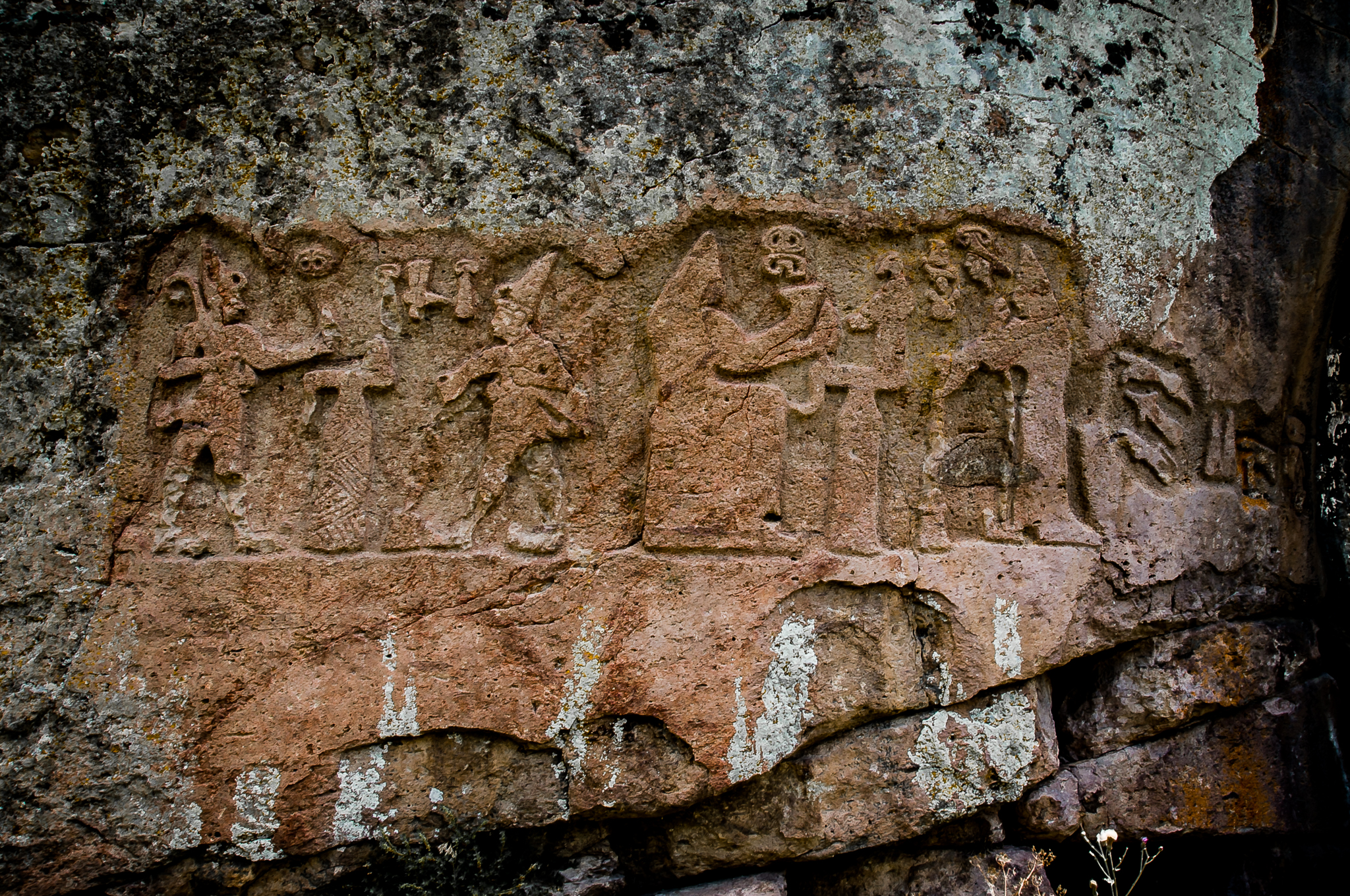
- Hieroglyphic Luwian12,012
- Lycian5,238
- Palaic2,051
- Lydian1,680
- Milyan (Lycian B)757
- Pisidian266
- Sidetic73
472 texts — enter a word form above to search them
| Text | Corpus | Words | Glossed |
|---|---|---|---|
| ADANA 1 (KARKAMIŠ) | Hieroglyphic Luwian | 40 | 90% |
| ADIYAMAN 1 | Hieroglyphic Luwian | 35 | 91% |
| ADIYAMAN 2 | Hieroglyphic Luwian | 6 | 100% |
| AFRIN | Hieroglyphic Luwian | 17 | 76% |
| AKSARAY | Hieroglyphic Luwian | 77 | 90% |
| ALEPPO 1 | Hieroglyphic Luwian | 14 | 100% |
| ALEPPO 2 | Hieroglyphic Luwian | 121 | 97% |
| ALEPPO 3 | Hieroglyphic Luwian | 19 | 95% |
| ALEPPO 4 | Hieroglyphic Luwian | 2 | 100% |
| ALEPPO 5 | Hieroglyphic Luwian | 2 | 100% |
| ALEPPO 6 | Hieroglyphic Luwian | 49 | 98% |
| ALEPPO 7 | Hieroglyphic Luwian | 49 | 82% |
| ALTINTEPE pithos inscriptions | Hieroglyphic Luwian | 28 | 96% |
| ALİŞAR | Hieroglyphic Luwian | 2 | 50% |
| ANCOZ 1 | Hieroglyphic Luwian | 27 | 100% |
| ANCOZ 10 | Hieroglyphic Luwian | 20 | 80% |
| ANCOZ 11 | Hieroglyphic Luwian | 12 | 92% |
| ANCOZ 12 | Hieroglyphic Luwian | 21 | 76% |
| ANCOZ 2 | Hieroglyphic Luwian | 8 | 75% |
| ANCOZ 3 | Hieroglyphic Luwian | 11 | 55% |
| ANCOZ 4 | Hieroglyphic Luwian | 7 | 71% |
| ANCOZ 5 - full | Hieroglyphic Luwian | 27 | 89% |
| ANCOZ 6 | Hieroglyphic Luwian | 8 | 62% |
| ANCOZ 7 | Hieroglyphic Luwian | 84 | 96% |
| ANCOZ 8 | Hieroglyphic Luwian | 29 | 79% |
| ANCOZ 9 | Hieroglyphic Luwian | 15 | 87% |
| ANDAVAL | Hieroglyphic Luwian | 25 | 80% |
| ANKARA | Hieroglyphic Luwian | 55 | 56% |
| ANKARA 2 | Hieroglyphic Luwian | 18 | 100% |
| ARSLANTAŞ | Hieroglyphic Luwian | 24 | 88% |
| ARSUZ 1 (AMUQ) | Hieroglyphic Luwian | 127 | 98% |
| ARSUZ 2 (AMUQ) | Hieroglyphic Luwian | 119 | 99% |
| ASMACIK | Hieroglyphic Luwian | 7 | 86% |
| ASSUR letter a | Hieroglyphic Luwian | 54 | 100% |
| ASSUR letter b | Hieroglyphic Luwian | 40 | 98% |
| ASSUR letter c | Hieroglyphic Luwian | 42 | 100% |
| ASSUR letter d | Hieroglyphic Luwian | 33 | 100% |
| ASSUR letter e | Hieroglyphic Luwian | 124 | 100% |
| ASSUR letter f+g | Hieroglyphic Luwian | 205 | 100% |
| BABYLON 1 | Hieroglyphic Luwian | 64 | 100% |
| BABYLON 2 | Hieroglyphic Luwian | 19 | 100% |
| BABYLON 3 | Hieroglyphic Luwian | 7 | 100% |
| BEIRUT | Hieroglyphic Luwian | 13 | 100% |
| BOHÇA | Hieroglyphic Luwian | 70 | 100% |
| BOR | Hieroglyphic Luwian | 47 | 96% |
| BOROWSKI 1 | Hieroglyphic Luwian | 23 | 61% |
| BOROWSKI 2 | Hieroglyphic Luwian | 10 | 60% |
| BOROWSKI 3 | Hieroglyphic Luwian | 60 | 82% |
| BOROWSKI seal 1 | Hieroglyphic Luwian | 2 | 100% |
| BOROWSKI seal 2 | Hieroglyphic Luwian | 1 | 100% |
Corpora: Overview & Acknowledgments
This section contains an overview of the corpora offered by the eDiAna project and our acknowledgments of the scholars who contributed to their preparation beyond their call of duty.
For the corpus of Luwian cuneiform texts, Starke 1985 and Melchert 2001a were used as starting points. The initial corpus annotation is based on ACLT1. Newly published fragments and recent joins were added within the framework of the project. The periodical transliteration updates of Luwian cuneiform texts came from the workshop of the Luwili partner project.
The Palaic corpus was digitalized and annotated entirely by our team. While most texts and transliterations are taken from Carruba 1970, newly discovered fragments were transliterated by the project members. Our preparation of the cuneiform corpora (Luwian and Palaic) was facilitated by the materials and information available at the HPM website.
In the instance of the Luwian hieroglyphic texts, Hawkins 1995 and Hawkins 2000 were used as the basic corpora of the Empire and Post-Empire periods respectively. The inscriptions that were not included in either of these publications were added within the framework of the eDiAna project. The hieroglyphic transliterations were adjusted according to modern conventions and more recent findings. The initial corpus annotation of the Post-Empire corpus is based on ACLT1. David J. Hawkins was kind enough to provide us with his new readings, especially those of the Empire period inscriptions.
Our Lycian corpus represents an adaptation of Melchert 2001b, which is in turn mostly based on the readings of Kalinka 1901, Friedrich 1932, and Neumann 1979. The recently published inscriptions not included in Melchert’s corpus were added by our project members, who are also responsible for corpus annotation. Birgit Christiansen kindly shared with us a number of her new readings prior to their publication (see now Christiansen 2019, 2020a, 2020b) and helped us with the new numbering of the recent inscriptions.
The Carian corpus was digitalized and annotated by our team. The corpus, the numbering of the inscriptions, and the transliteration system are based on the edition of Adiego 2007. Additionally, inscriptions discovered or identified in publications after Adiego 2007 have also been added in the framework of the eDiAna project.
Our Lydian corpus represents an adaptation of Melchert 2001c, which is in turn mostly based on Gusmani 1964 and Gusmani 1980–1986. Its transliteration was adjusted according to modern conventions by our team, who is also responsible for corpus annotation. The inscriptions not included in Melchert’s corpus were assigned numbers in collaboration with Annick Payne and added to the corpus by our project members.
The Sidetic corpus was digitalized and annotated by our team. The corpus and the numbering of the inscriptions follow the edition of Nollé 2001: 625-646 (but also referring to the Zinko numbering system, as in e.g., Zinko & Zinko 2019: 418). The transliteration system is based on Pérez Orozco 2007, but the reader should consult the “Graphic Features” section of each entries for a detailed discussion. Additionally, an inscription discovered after Nollé 2001 has also been added in the framework of the eDiAna project. Further newly discovered inscriptions could not have been included lacking publication (as of 2021) or authenticity.
The Pisidian corpus is based entirely on Brixhe 2016, but it was digitalized and annotated by our team.
Specific information regarding the choice of individual readings and of word interpretations is found in the relevant dictionary lemmata. The corpus will be regularly improved and updated until the completion of the eDiAna project.
BIBLIOGRAPHY
ACLT1: Annotated Corpus of Luwian Texts, compiled by Ilya Yakubovich in collaboration with Timofey Arkhangelsky, Sergey Boroday, and Alexei Kassian. URL: http://web-corpora.net/LuwianCorpus/search/. Last modification: 2015.
Adiego, Ignacio J. (2007): The Carian Language. Handbuch der Orientalistik I.86. Leiden – Boston: Brill.
Brixhe, Claude (2016): Stèles et langue de Pisidie. Paris: De Boccard.
Carruba, Onofrio (1970): Das Palaische. Texte, Grammatik, Lexikon. Studien zu den Boğazköy-Texten 10. Wiesbaden: Harrassowitz.
Christiansen, Birgit (2019): “Editions of Lycian Inscriptions not Included in Melchert’s Corpus from 2001.” In: Adiego, Ignasi-Xavier / García Trabazo, José Virgilio / Vernet, Mariona / Obrador-Cursach, Bartomeu / Martínez Rodríguez, Elena (eds.), Luwic Dialects and Anatolian Inheritance and diffusion. Barcelona: Edicions de la Universitat de Barcelona, 65–134.
Christiansen, Birgit (2020a): Grave Matters: Legal Provisions for a Proper Final Rest in Classical Lycia. In: Martin Zimmermann (ed.), Das Xanthostal Lykiens in archaisch-klassischer Zeit. Eine Archäologisch-historische Bestandsaufnahme. Goettingen: Vandenhoeck & Ruprecht, 166–261.
Christiansen, Birgit (2020b): Eine neue lykisch-griechische Bilingue aus Tlos: Eine Dedikation oder Ehreninschrift der Polis von Tlos. In: Martin Zimmermann (ed.), Das Xanthostal Lykiens in archaisch-klassischer Zeit. Eine Archäologisch-historische Bestandsaufnahme. Goettingen: Vandenhoeck & Ruprecht, 262–272.
Gusmani, Roberto (1964): Lydisches Wörterbuch, mit grammatischer Skizze und Inschriftensammlung. Heidelberg: Winter. Gusmani, Roberto (1980–1986): Lydisches Wörterbuch, mit grammatischer Skizze und Inschriftensammlung. Ergänzungsband. Heidelberg: Winter.
Friedrich, Johannes (1932): “Lykische Texte.” In: Friedrich, Johannes, Kleinasiatische Sprachdenkmäler, Berlin: de Gruyter, 52–90.
Hawkins, J. David (1995): The Hieroglyphic Inscription of the Sacred Pool Complex at Hattusa. With an Archaeological Introduction by Peter Neve. Studien zu den Boğazköy-Texten, Beiheft 3. Wiesbaden: Harrassowitz.
Hawkins, J. David (2000): Corpus of Hieroglyphic Luwian Inscriptions. Volume I: Inscriptions of the Iron Ages. Untersuchungen zur indogermanischen Sprach- und Kulturwissenschaft. Neue Folge, 8/1. Berlin / New York: de Gruyter.
HPM: Hethitologie Portal Mainz. URL: https://www.hethport.uni-wuerzburg.de/HPM/index.php.
Kalinka, Ernst (2001): Tituli Lyciae lingua Lycia conscripti. Vienna: Hoelder.
Melchert, H. Craig (2001a): Cuneiform Luvian Corpus. Version: 07/20/2001. URL: https://linguistics.ucla.edu/people/Melchert/CLUVIAN.pdf.
Melchert, H. Craig (2001b): Lycian Corpus. Version: 07/06/2001. URL: https://linguistics.ucla.edu/people/Melchert/lyciancorpus.pdf.
Melchert, H. Craig (2001c): Lydian Corpus. Version: 07/02/2001.URL: https://linguistics.ucla.edu/people/Melchert/lydiancorpus.pdf.
Neumann, Günter (1979): Neufunde lykischer Inschriften seit 1901. Vienna: Österreichische Akademie der Wissenschaften.
Nollé, Johannes (2001): Side im Altertum. Geschichte und Zeugnisse II. Inschriften griechischer Städte aus Kleinasien 44. Bonn: Habelt.
Pérez Orozco, Santiago (2007): La lengua sidética. Ensayo de síntesis. Kadmos 46: 125-142.
Starke, Frank (1985): Die keilschrift-luwischen Texte in Umschrift. Studien zu den Boğazköy-Texten 30. Wiesbaden: Harrassowitz.
Zinko, Christian – Zinko, Michaela (2019): Sidetisch – Ein Update zu Schrift und Sprache. In: Ronald I. Kim – Jana Mynářová – Peter Pavúk (eds.): Hrozný and Hittite: The First Hundred Years. Proceedings of the International Conference Held at Charles University, Prague, 11–14 November 2015. Culture and History of the Ancient Near East 107. Leiden – Boston: Brill, 416-432.